ELI5
Explain it like I’m fiveiモード(アイモード)What was i-mode?
日本語English
In one linei-mode was NTT Docomo’s mobile internet service, launched in 1999. Its emoji became the basis of emoji used worldwide.
i-mode was a service NTT Docomo started in 1999 that let you use the internet on a mobile phone. You could send email, check the weather and news, and download ringtones. It was one of the world’s first real mobile internet services. To help people share feelings on tiny screens, it introduced emoji. Later, emoji went into smartphones everywhere, and even English just calls them “emoji.” From a tiny screen came a language the whole world speaks.
Common mix-upYou can’t use i-mode now. It ended in March 2026, when Docomo shut down its 3G network.
Words to know / 単語メモ
- mobile phone
- 携帯電話
- download
- ダウンロードする
- introduce
- 取り入れる
- shut down
- 終了する
Your turn
Did you know this word?
Tap to see what everyone said.
Related words
 Garakei (Galápagos phone)Garakei, short for “Galápagos keitai,” means the Japanese mobile phones before smartphones, …
 Pager (pokeberu)A pager, or pokeberu, was a small device that fit in your pocket and beeped when someone called it.
 Dial-up internetDial-up was a way to get online through your home phone line.
 Tele-hodaiTele-hodai was a plan NTT started in 1995: unlimited calls to chosen numbers from 11 p.m.
 Chaku-melo (phone ringtones)Chaku-melo is short for “incoming call melody,” the tune a phone plays when someone calls.
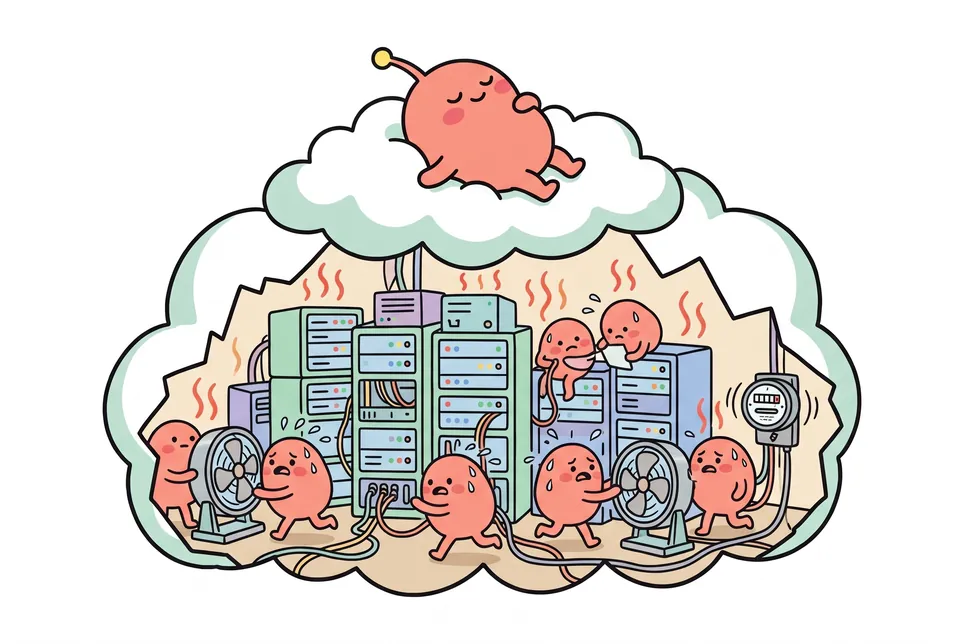 Data centerA data center is a building that houses many servers and network machines, with steady power…
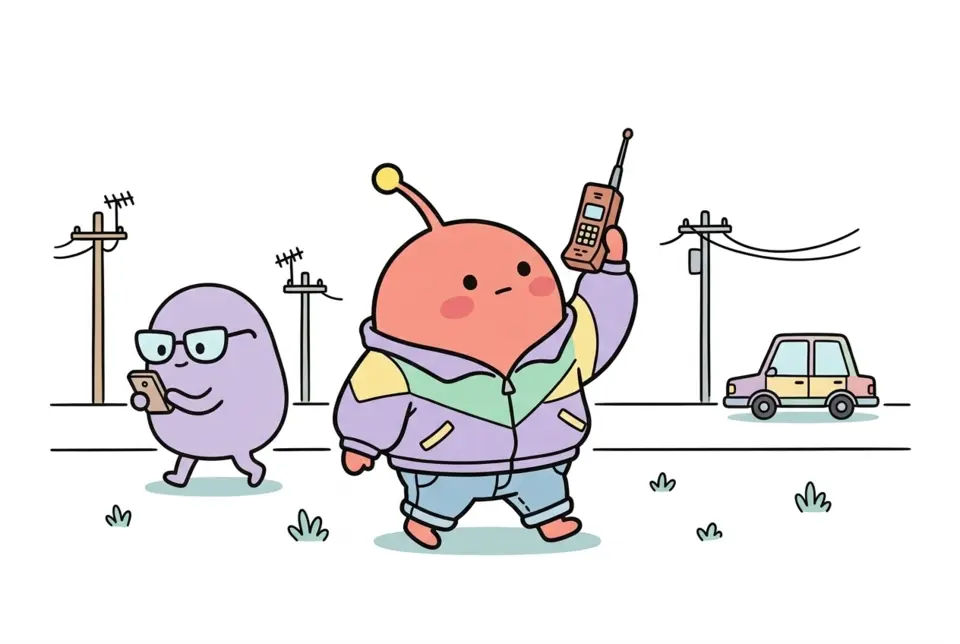 PHSQ. Did PHS work like a regular mobile phone?
A. PHS did not work the same way as mobile phones. It was a different s…
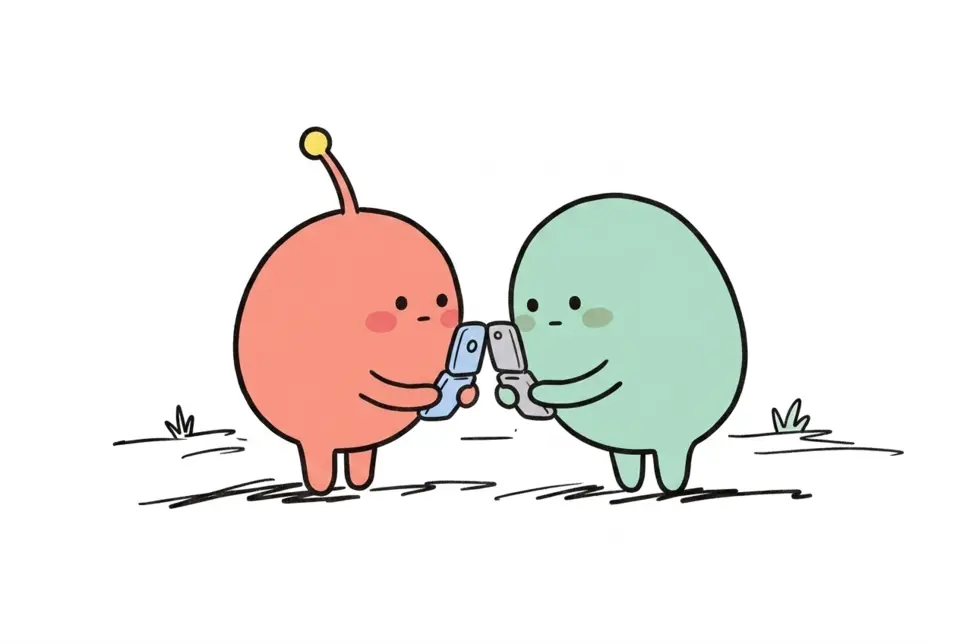 Infrared data transferInfrared data transfer uses infrared, a kind of light we can’t see, to send data between devices close by.
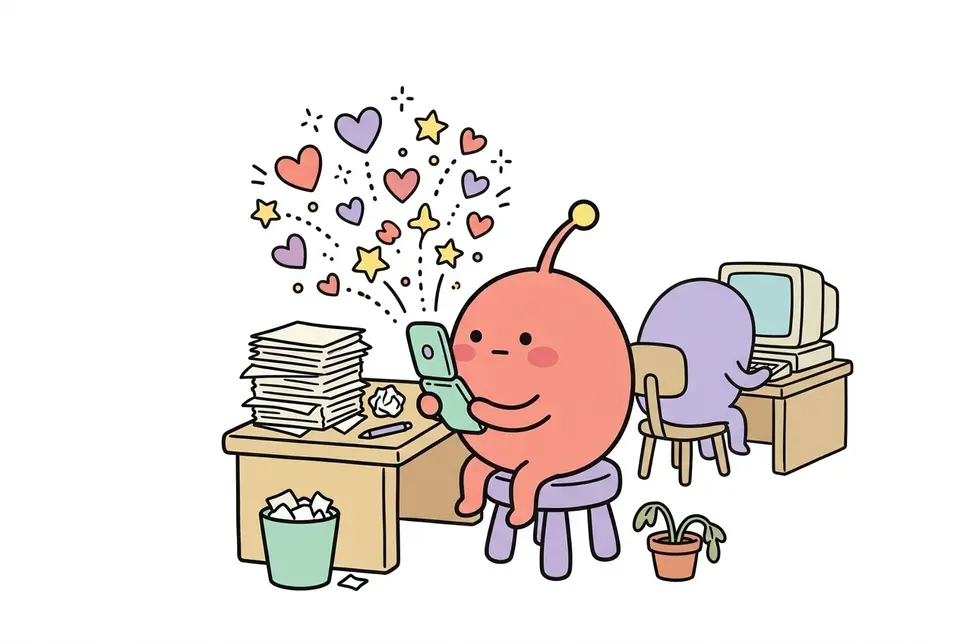 Deco-mailDeco-mail, short for NTT Docomo’s Deco Mail, was a service for sending mobile phone emails w…
 The cloudQ. Will data in the cloud never disappear?
A. Things in the cloud are not safe forever. Services can end and mista…
 5GQ. Does the G in 5G mean giga?
A. The G does not mean giga. It stands for “generation,” so 5G means th…
A. Wi-Fi is not the internet itself. Wi-Fi is the wireless link between…
Source (in Japanese): iモード