ELI5
Explain it like I’m five落語のまくら(らくごのまくら)What is the makura in rakugo?
日本語English
In one lineThe makura is the opening talk in rakugo before the main story. It warms up the audience and leads naturally into the tale.
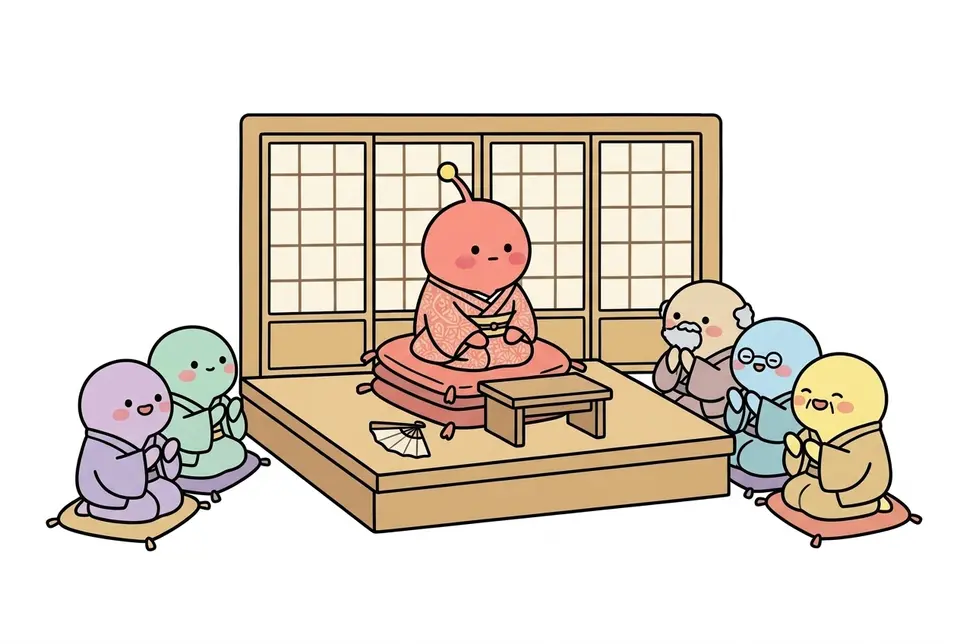
In rakugo, Japanese comic storytelling, the makura is the short chat before the main story. It is placed in front of the story like a pillow under your head, which is what makura means. The storyteller warms up the room with talk about the weather or the news, and feels out what kind of jokes this crowd likes. Then they slide smoothly into a topic that leads to today’s story. Sometimes the makura is so funny that people remember it better than the story.
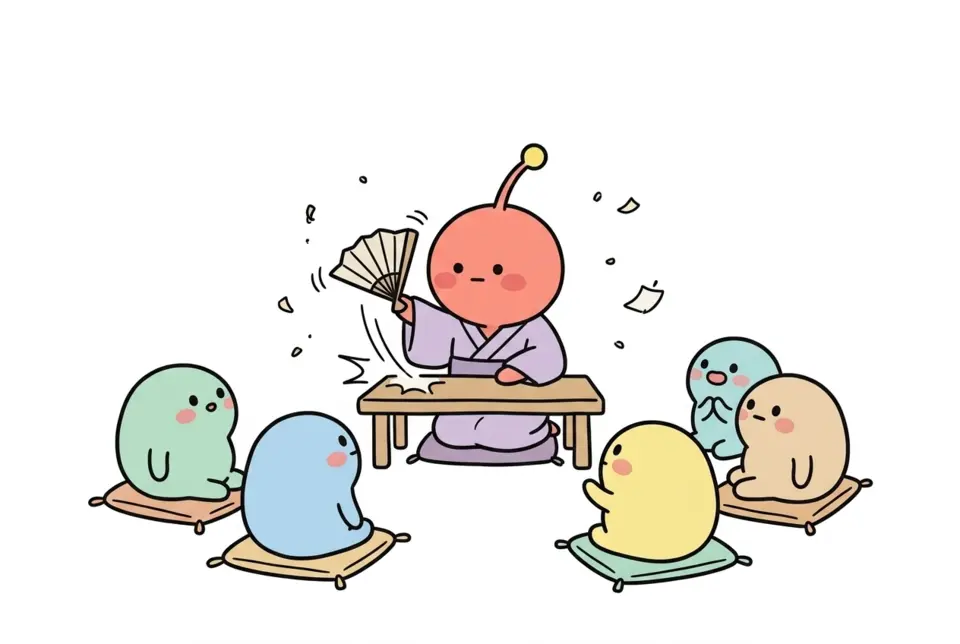
In JapanRakugo is a one-person comic story told while kneeling on a cushion, with just a fan and a cloth.
Common mix-upThere is no fixed script. Storytellers often change it to fit the day’s audience and the news.
Words to know / 単語メモ
- pillow
- 枕
- warm up
- 温める
- crowd
- 客
- script
- 台本
Your turn
Did you know this word?
Tap to see what everyone said.
Related words
 Omukou (kabuki shout-outs)Omukou are the shouts from the audience at big moments in kabuki, calling out an actor’s house name, like “Naritaya!” or…
 Boke and tsukkomiJapanese comedy duos, called manzai, have two roles: boke and tsukkomi.
 Kabuki
 Kumadori (kabuki makeup)Q. Do all kabuki actors wear kumadori?
A. Not every kabuki actor wears kumadori. It is used mainly for wild, h…
 NohQ. Do all noh actors wear masks?
A. Not every actor wears a mask. Mainly the lead role wears one, and so…
 KyogenQ. Is kyogen too difficult to laugh at?
A. Kyogen is not a stiff, hard-to-follow classic. It is comedy built on…
 BunrakuBunraku is a traditional Japanese art from Osaka, where puppets act out stories.
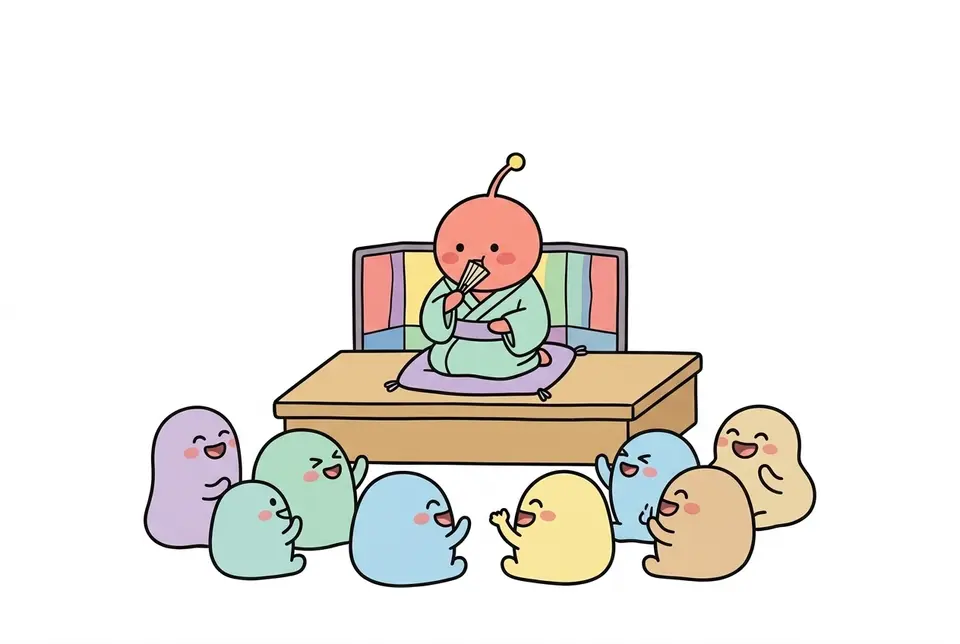 RakugoRakugo is a Japanese art of storytelling.
 Shin’uchiShin’uchi is the highest rank a rakugo storyteller can reach.
 Kodan (storytelling)Kodan is a traditional Japanese art of storytelling.
 Geisha and maikoA geisha is a woman whose job is to entertain at banquets with arts such as dance and shamis…
Source (in Japanese): 枕 (落語)