ELI5
Explain it like I’m five実家じまい(じっかじまい)What is jikka-jimai?
日本語English
In one lineJikka-jimai means clearing out the family home after parents no longer live there, and deciding whether to sell, rent or tear it down.
Jikka-jimai means closing up the home your parents lived in. You sort their things. Then you choose to sell it, rent it out or tear it down. Many people think one weekend is enough. But sorting old memories takes time. Talking it over with brothers and sisters takes time too. Taxes are one reason to hurry. In Japan, if you sell an empty home you got from a parent, you may take up to 30 million yen off the profit. But you must sell by December 31 of the year three years after the parent died. Every photo album slows you down. Memories never expire. The tax break does.
- inherit
- 相続する
- sort
- 仕分ける
- tear down
- 取り壊す
- profit
- もうけ
- deadline
- 期限
- tax break
- 税の特例
Go deeper
Where to start
1) Decide as a family: sell, rent, keep or tear down. 2) Check whose name the house is in. Since April 2024, registering an inherited home is required in Japan. 3) Clear out the house. 4) Ask an agent for a price, or get a quote for demolition. 5) If you sell, check which tax breaks apply and their deadlines. Deciding the plan before you start clearing makes it easier to choose what to keep.
How the ¥30 million tax break works
If you inherit a house where a parent lived alone and then sell it, you can take up to ¥30 million off the profit before tax. The house must have been built on or before May 31, 1981, and you must sell by December 31 of the year that marks three years after the inheritance, among other rules. Since 2024 it also applies when the buyer tears the house down or makes it earthquake-safe after the sale. If three or more people inherit the house and land, the break drops to ¥20 million each.
What happens if you leave it empty
Empty houses wear out fast, and overgrown trees or leaks can trouble the neighbors. If the town formally warns the owner about a badly kept house, the land can lose its property tax discount, and the tax goes up.
How people use it
- “Let’s talk about closing up Mom and Dad’s house when we’re all home for Obon.”
- “I went to clear out the family home and came back with every photo album.”
Questions people ask
- What if brothers and sisters disagree?
- Put numbers on the table first, such as the house price and the yearly upkeep. If you still cannot agree, a legal professional can help.
- Can anyone use the vacant-home tax break?
- No. There are rules about when the house was built, a parent living there alone, the selling deadline and a sale price of ¥100 million or less. Check with the tax office or a tax accountant.
Sources:National Tax Agency No.3306 (in Japanese)、MLIT: tax break for vacant homes (in Japanese)、Ministry of Justice: inheritance registration (in Japanese)
Your turn
What about you?
Tap to see what everyone said.
Related words
A. No. Debts are passed on too, not only savings and houses.
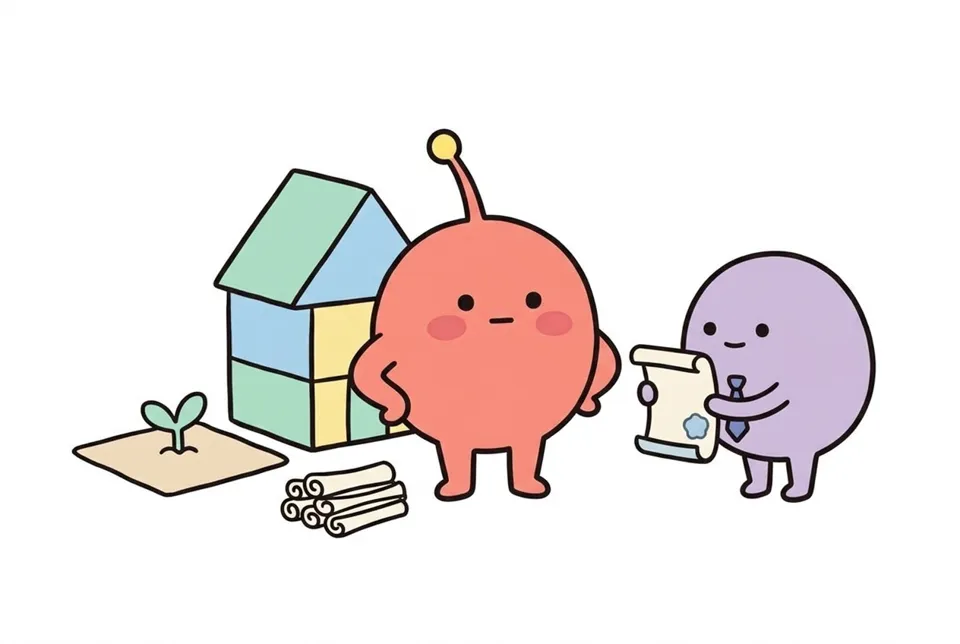 Fixed asset taxFixed asset tax is a local tax charged each year to whoever owns land or buildings on Januar…
 Shukatsu (job hunting)
A. No. They also include online accounts and subscriptions that keep ru…
 Childcare leave (ikukyu)Ikukyu is short for childcare leave.
 Bank transfer scamA bank transfer scam is a fraud where criminals trick people, often by phone, into sending o…
 Oya gachaOya gacha is internet slang that compares children not being able to choose their parents or…
 Pocket money
 Kakeibo (household account book)
 Oyakaku
 Dependent (fuyo)Q. Are tax fuyo and insurance fuyo the same?
A. Tax fuyo and social insurance fuyo are not the same thing. Each has …
 Inheritance taxQ. Do you always pay tax when you inherit?
A. You don’t always pay it when you inherit. If the estate is within th…
Source (in Japanese): 国税庁「No.3306 被相続人の居住用財産(空き家)を売ったときの特例」