ELI5
Explain it like I’m five引っ越しのあいさつ(ひっこしのあいさつ)What is hikkoshi aisatsu?
日本語English
In one lineHikkoshi aisatsu is the Japanese custom of visiting nearby neighbors around the time you move, introducing yourself and often giving a small gift.
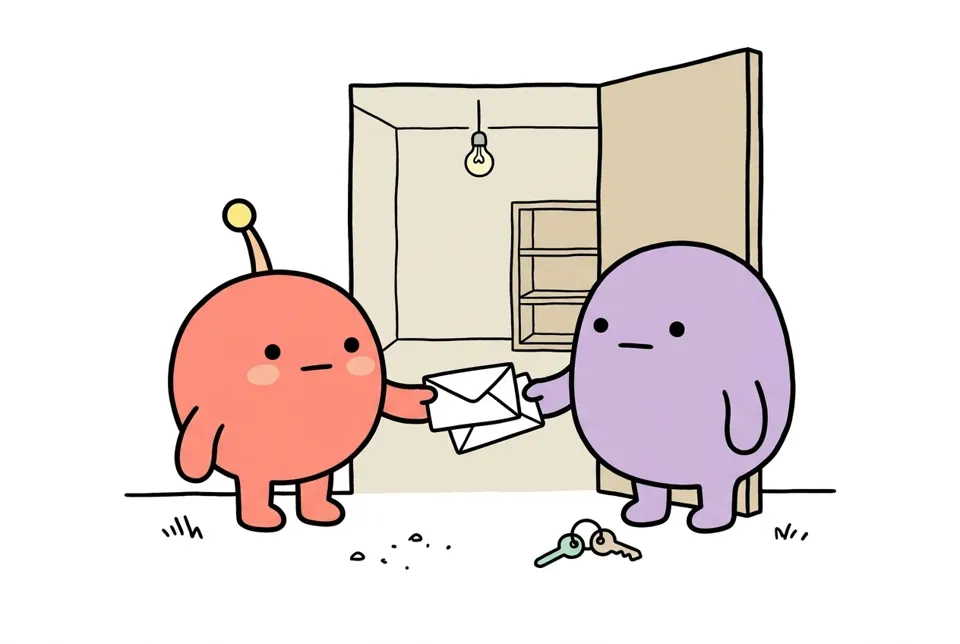
Hikkoshi aisatsu is the Japanese custom of saying hello to your neighbors after you move in. You knock, say your name, and often give a small gift. Towels, dish soap or snacks are classic choices. For a house, people visit the three homes across the street and the ones on each side. In an apartment, it is often the rooms next door, above and below. These days, some people skip it for safety, especially if they live alone. Still, there is one quiet benefit. Noise is easier to forgive when you know the face behind it.
- neighbor
- 近所の人
- custom
- 習慣
- knock
- ノックする
- dish soap
- 台所用洗剤
- forgive
- 許す
Your turn
Did you know this word?
Tap to see what everyone said.
Related words
 Shikikin and reikin (deposit and key money)Q. Is the deposit gone for good?
A. No. Normal wear from everyday living should not be taken out, so the…
 Madori (floor plan)
 Naiken (viewing a home)Naiken is visiting a property in person before signing a contract to rent or buy it, to chec…
 Bowing (ojigi)Ojigi is the Japanese bow: bending the head or upper body forward to show respect, greeting,…
A. Once you take a plate, do not put it back on the belt. It is an impo…
A. It is not only a Japanese custom. Korea, the Nordic countries and ot…
 Koshinryo (lease renewal fee)Koshinryo is a one-time fee a tenant pays the landlord when renewing a rental contract at th…
 Genjo kaifuku (restoring a rental)Genjo kaifuku means fixing damage you caused before you move out of a rented room.
 Kyoekihi (common area fee)Kyoekihi is a monthly fee for the parts of a building that everyone uses.
 Sodai gomi (bulky trash)Q. Can I throw out a TV as bulky trash?
A. No. TVs, air conditioners, fridges and washing machines follow a sep…
 Osaji and kosaji (tablespoon and teaspoon)
 Shosho and hitotsumami (a little and a pinch)Shosho is a very small amount you can pick up with your thumb and pointer finger. Hitotsumam…
Source (in Japanese): Wikipediaで「引っ越しのあいさつ」を調べる