ELI5
Explain it like I’m five小1の壁(しょういちのかべ)What is the first-grade wall?
日本語English
In one lineThe first-grade wall is the difficulty parents face balancing work and childcare when a child enters elementary school, because of care hours, school events and similar issues.
The “first-grade wall” is a problem working parents face when their child starts elementary school. At daycare, children can often stay until late in the day. But at elementary school, after-school care may close earlier. Sometimes there is no place at all. Then come weekday school events, PTA jobs, checking homework every night, and packed lunches all summer. None of these are bad things on their own. But together, keeping a job and raising a child suddenly gets harder. The child gets one year bigger. The parents’ day does not get one minute longer.
- daycare
- 保育園
- working parent
- 共働きの親
- balance
- 両立する
- packed lunch
- お弁当
- invisible
- 見えない
Go deeper
A wall made of time gaps
Many daycare centers offer extended hours from early morning to evening. Elementary school, though, usually starts around 7:30 to 8:00 a.m., so children must be sent off before that. After-school clubs often close around 6:00 to 6:30 p.m., earlier than daycare, so parents must pick up sooner. Gaps open up between school hours and work hours in both the morning and the evening.
What the government and families do
More and more children want after-school club places, and some end up on waiting lists. Japan's Children and Families Agency and Ministry of Education have drawn up an after-school action plan to add spaces and staff. Families are advised to ask employers about remote work or staggered hours, look into private clubs, and team up with neighbors. Many parents start gathering information a year before school begins.
How people use it
- “First grade starts in April. School starts at 8, but my job starts at 8:30, so the mornings don't work.”
- “After-school club closes at 6, so I sprint to pick up every day.”
Questions people ask
- When do parents hit the first-grade wall?
- Often during the spring break before school or just after it starts. Application periods for after-school clubs differ by city, so check early.
- What can parents do about it?
- Ask about remote work or staggered hours, look into private clubs or local family support services, and share help with neighbors. Your city's childcare office can tell you more.
- How late are after-school clubs open?
- Many close around 6:00 to 6:30 p.m., earlier than some daycare centers. Hours differ by club, so check with your city or the club.
Sources:Wikipedia「小1の壁」、こども家庭庁「放課後児童健全育成事業」、コトバンク「学童保育」(日本大百科全書)
Your turn
How was the first-grade wall?
Tap to see what everyone said.
Related words
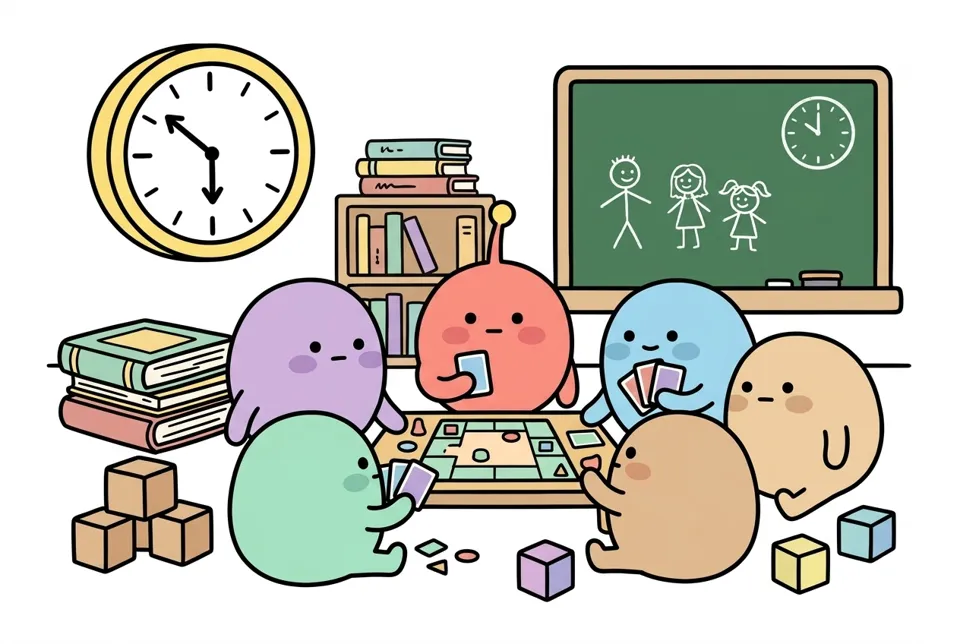 Gakudo hoiku (after-school care)Gakudo hoiku (official name: after-school children’s club) gives elementary school kids whos…
 Chugaku juken (junior high entrance exams)Chugaku juken means taking entrance exams to get into a junior high school.
 Naishinten (school report points)Naishinten are points made from the grades in the report a junior high school writes for hig…
 PTA (Parent-Teacher Association)Q. Do I have to join the PTA?
A. No. No law makes you join. Joining the PTA is, in principle, volunta…
 Jugyo sankan (class observation day)Jugyo sankan is a school day when parents come to watch a normal class.
 School-lunch fried breadAge-pan is a school lunch dish of a bread roll deep-fried and coated in sugar, kinako or sim…
 RandoseruA randoseru is the box-shaped backpack Japanese elementary school children use for school. T…
 Exchange diaryAn exchange diary is one notebook that friends pass around.
 Eraser cleanerA blackboard eraser cleaner is a machine that sucks chalk dust off erasers, like a little vacuum.
A. They were not tight from the start. At first they were loose, trouse…
 The 300-yen snack rule“Snacks for the school trip: 300 yen” means schools set a limit on how much snack money kids could bring on a day trip.
Source (in Japanese): Wikipediaで「小1の壁」を調べる